
The context
Snagging management systems have significantly improved the way construction projects are monitored through to completion. They provide valuable traceability, facilitate communication between stakeholders and offer an overall view of progress.
Yet there are situations in which the best tool is not necessarily the one that will achieve the objective most quickly.
The role of a project management adviser is therefore not simply to prepare meetings, visit the construction site, monitor the progress of the works, track the financial position or organise the overall management of a project.
It also means knowing how to be present at the right time, in the right place. Bridging the gap when communication becomes more difficult. Picking up on the early warning signs of a potential problem or delay.
It means being able to bring teams together around a shared objective, support them as pressure mounts in the run-up to handover and everyone becomes focused on their own immediate priorities. And, when necessary, rally everyone around a collective effort in the interests of the project.
It also means knowing when to be agile and inventive when, deep down, you know that the usual procedures will not be enough to achieve the objective.
That is precisely what happened during the phased handover of the Sheraton Nice’s 234 guestrooms.
The Challenge: Prioritising
Handover was organised in successive phases to enable the operator to prepare the hotel for opening on schedule.
At this stage of the project, not all outstanding items were equally important.
Some genuinely prevented a guestroom from being handed over to the operator. Others could perfectly well be rectified later, within the contractual timeframe.
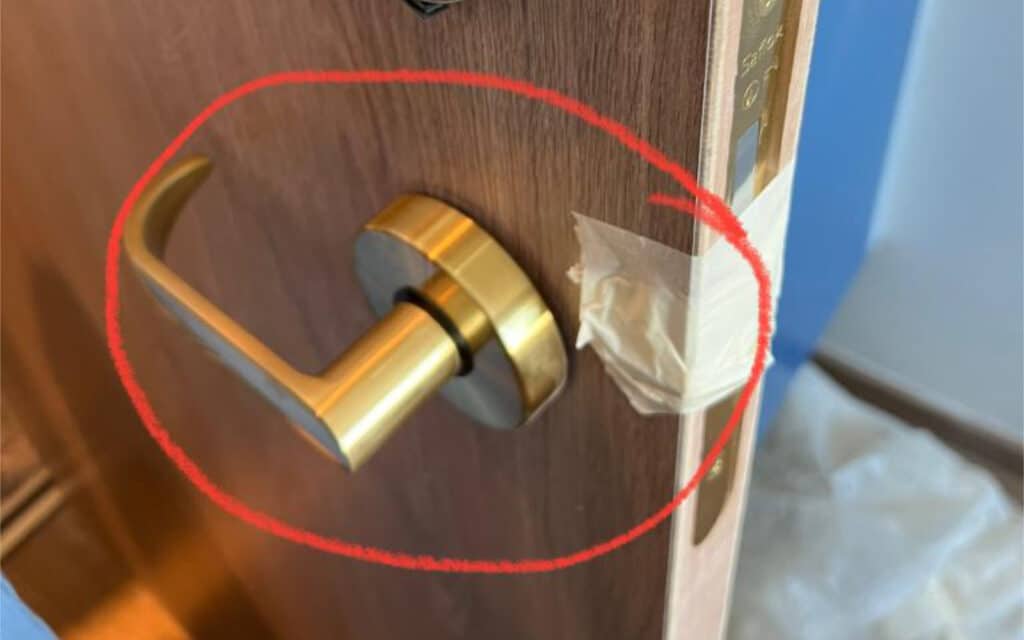
The software provided a comprehensive record of all outstanding items. But on site, it did not enable contractors to identify immediately which ones were preventing the guestrooms scheduled for handover that day from being released.
The risk was clear: contractors would naturally address outstanding items in the order in which they appeared, whereas the objective was not to close out the greatest possible number of items, but to get the guestrooms ready for handover.
The solution
Working closely with the operator, we identified the outstanding items that were genuinely preventing the guestrooms from being released.
Finding a solution was not enough. The key was to ensure that the contractors understood why this priority had become everyone’s concern.
And the answer was not another tool.
It came down to a few sheets of A4 paper that I had slipped into my bag “just in case” before the pre-handover inspections.
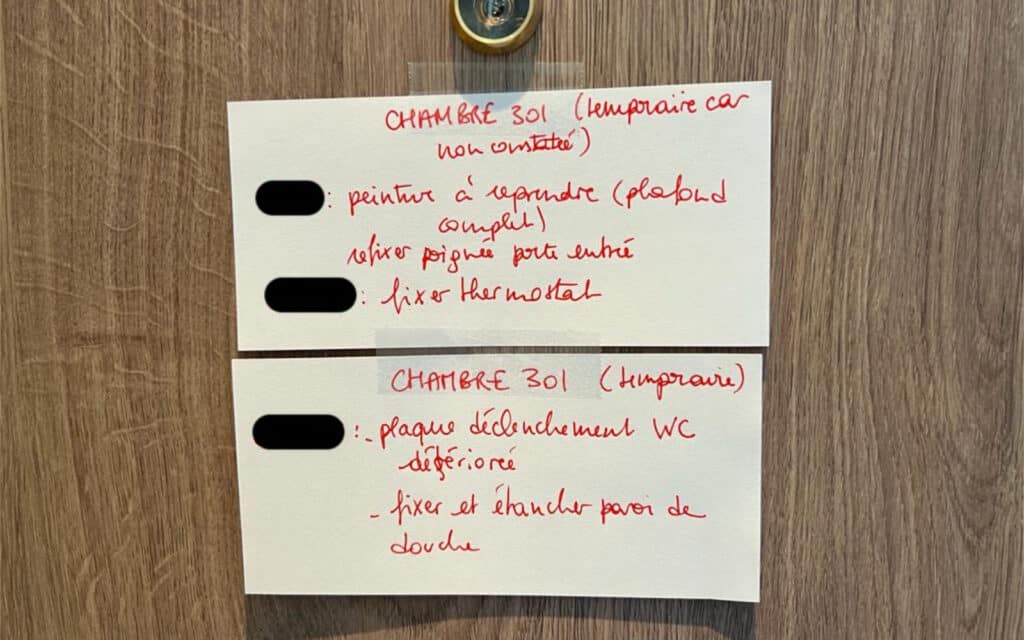
I cut them into four, then wrote by hand, in red, the room number, the name of the contractor concerned and the priority items to be addressed, before attaching them directly to the doors of the relevant guestrooms.
When the trades arrived on the different floors, they immediately knew where to go, why they were going there and what needed to be done for the room to be handed over.
The priority was no longer buried among several thousand outstanding items on a tablet. It was immediately visible on site.
The result
The contractors fully understood the purpose of this approach and embraced it.
They were no longer working simply to close out outstanding items. They were working to get the guestrooms ready for handover.
Together, we achieved the objective. All the items preventing handover were rectified within the timeframe required for the phased release of the guestrooms to the operator. The remaining items then followed the normal close-out process in accordance with the contractual programme.
There was nothing spectacular about the solution, but it proved remarkably effective in achieving the handover objective.
My Perspective as a Project Management Adviser
The added value of a project management adviser also lies in the ability to identify, at the right moment, the most appropriate solution for achieving the project’s objective.
Putting a few sheets of paper on guestroom doors was not a random decision.
It was the result of my professional experience, my knowledge of the project, my understanding of the operator’s requirements, the way contractors work and the tools used to manage outstanding items.
Above all, it came from understanding the chain of causes and consequences that connects every decision made throughout a project.
I also know that a simple handwritten message, written in red and displayed on a door, immediately attracts attention and carries considerable impact. In this particular situation, it proved more effective than a tablet screen displaying several thousand outstanding items.
Ultimately, this remarkably simple solution was a natural expression of having the project firmly under control.